
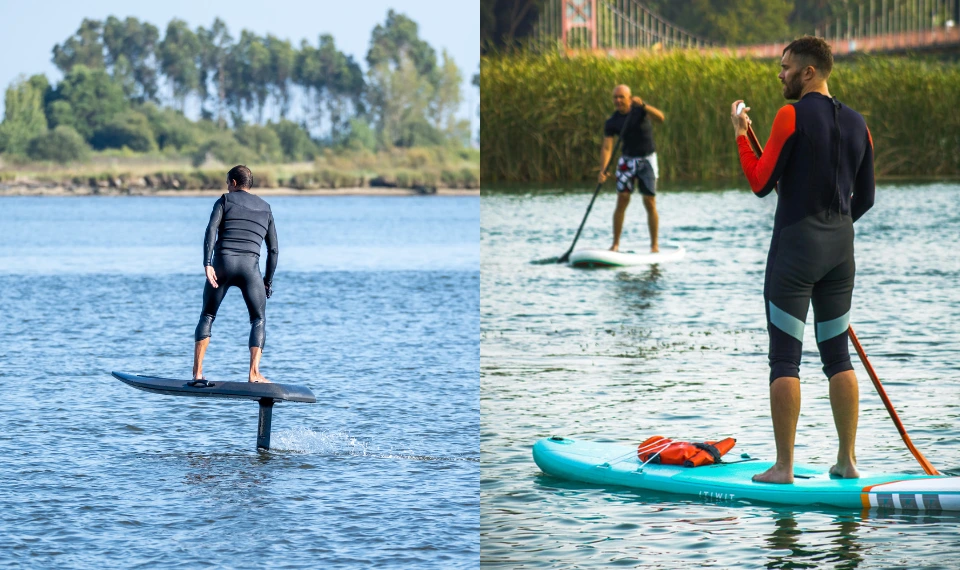
Water sports offer different ways to enjoy the ocean, and two activities that often attract curious beginners are hydrofoiling and SUP surfing. Both involve riding a board on the water, but the equipment, techniques, and learning experiences are quite different.
Understanding hydrofoil vs sup surf can help you decide which activity suits your interests and current ability. SUP surfing involves riding waves on a larger board with the help of a paddle, while hydrofoiling uses a specialised underwater foil to lift the board above the surface. Here is what beginners should know before choosing between them.
What Is SUP Surfing?
SUP surfing combines stand up paddle boarding with traditional surfing. Riders use a larger board and a paddle to move through the water, position themselves for incoming waves, and catch waves before riding them towards the shore.
The paddle gives you an additional way to control your movement. It can help you maintain balance, adjust your direction, and generate speed when approaching a wave. However, you still need to understand wave conditions and learn how to position yourself safely.
For beginners, SUP surfing can be easier to approach in suitable conditions because the board is generally more stable than a traditional short surfboard. That does not mean it requires no practice. You still need to develop balance, paddle control, and an understanding of the ocean.
What Is Hydrofoiling?
Hydrofoiling is a water sport that uses a board attached to a hydrofoil. The foil sits beneath the board and includes a mast, fuselage, and wings. As the rider gains enough speed, the foil generates lift and raises the board above the water.
Once the board lifts, there is less contact with the surface. This creates a smooth riding sensation that is different from ordinary surfing or paddle boarding. Hydrofoiling can be done with different types of equipment, including foil boards powered by waves, wind, or electric assistance systems.
For beginners, the main challenge is learning how to control the lift and maintain a stable riding position. Small changes in weight distribution can affect the board’s height and direction, so controlled movements are important.
Hydrofoil vs SUP Surf: Key Differences
The biggest difference between these activities is how the board moves across the water. SUP surfing relies on the board’s contact with the surface, while hydrofoiling uses an underwater wing to lift the board above it.
SUP surfing generally involves paddling towards a wave and using the paddle to support balance and direction. Hydrofoiling requires you to manage speed, lift, and body position. The equipment is also different, as hydrofoil boards have specialised components underneath the board that are not found on standard SUP equipment.
Another difference is the learning process. SUP surfing requires you to understand wave timing and paddling techniques. Hydrofoiling adds another technical challenge because you must learn how to control the foil without allowing the board to rise too quickly or lose stability.
Which One Is Better for Beginners?
The right choice depends on your goals and the conditions available. If you want to learn how to catch waves using a paddle, SUP surfing may be a suitable option. It allows you to develop balance, paddling skills, and wave awareness while enjoying the familiar feeling of riding on the water.
Hydrofoiling may appeal more to beginners who are interested in learning a specialised board sport. However, it generally requires more technical guidance, particularly when learning how to control the foil and manage the board’s lift.
If you want to get comfortable with stand up paddle boarding first, you can try a standing paddle board rental from Priority SUP. It gives you an opportunity to practise basic paddling and balance before exploring other board sports.
When comparing hydrofoil vs sup surf, it is important not to choose based only on which activity looks easier. Consider your comfort in the water, previous experience, and access to proper instruction. A lesson with a qualified instructor can help you understand the equipment and avoid developing unsafe habits.
Safety Tips Before Your First Session
Regardless of which activity you choose, safety should come first. Start in conditions that match your ability and avoid crowded areas while learning. Always listen to the instructor’s guidance and understand how to use the equipment before entering the water.
For SUP surfing, learn basic paddling, turning, and falling techniques. Be aware of other surfers and swimmers, and avoid entering waves that are beyond your ability.
For hydrofoiling, keep a safe distance from other people because the foil has hard edges and can cause injuries. Wear suitable protective equipment, follow the recommended setup, and practise under supervision. Beginners should not attempt to learn in challenging conditions without proper support.
Learn Foil Drive with Priority SUP in Bali
If hydrofoiling interests you, Priority SUP offers an opportunity to learn with its official Foil Drive lessons in Bali. The private 1:1 coaching takes place on calm, flat water, and you do not need previous foiling experience to get started. An instructor can guide you through the controls, safety procedures, and basic riding techniques.
Understanding hydrofoil vs sup surf is a useful first step, but trying the activity with proper guidance can give you a clearer idea of what suits you. Contact Priority SUP to learn more about its Foil Drive lessons and plan your first experience on the water.